Online Safety and Digital Literacy
“Every child deserves to explore the online world safely — protecting them isn’t optional, it’s essential.”
Helping young people navigate the online world safely is a shared responsibility between schools, parents and carers, and the wider community. In England, online risks are increasing, and evidence shows that a significant number of children experience concerning online interactions. Research shows that 19% of children aged 10–15 had exchanged messages with someone they’d never met in the past year, highlighting how easily young users can be exposed to unsafe online contact. Alongside this, levels of loneliness, a known risk factor for poor mental health, affect many older pupils: in England 55 in 1,000 children aged 11–16 report feeling lonely often or always. Together, these indicators underline the importance of adults working collaboratively to guide and protect young people online. [learning.n…pcc.org.uk] [centreform…lth.org.uk]
There is growing and worrying evidence of the link between mental health difficulties and young people’s online experiences. In England, children aged 11–16 with a probable mental health condition are three times more likely to miss a week or more of school compared to their peers, demonstrating the tangible impact mental distress can have on daily life and education. As online spaces can expose young people to harmful or distressing content, consistent support from parents, carers and schools is essential in helping them build resilience and manage their digital lives safely. [youngminds.org.uk] [centreform…lth.org.uk]
In England, the government has now strengthened its position on mobile phones in schools to support better wellbeing and learning. Updated Department for Education guidance (January 2026) states that “all schools should be mobile phone‑free environments by default,” giving schools clear backing to prohibit device use throughout the school day. In our school, we teach students how to manage online risks through the curriculum and offer strong pastoral support but we know that many parents and carers can find this difficult to navigate. The information here is designed to support parents and carers to set boundaries, stay involved, and encourage open conversations about online life. [wired-gov.net] [childrensc…ner.gov.uk]

‘What I wish my parents or carers knew…’
A guide for parents and carers on managing children’s digital lives

Report a Concern:
If you are concerned about digital harm to a young person in your care, you can report this through the following ways:
Report Harmful Content – We Help You Remove Content
Report a crime | Devon & Cornwall Police
For in-school support:
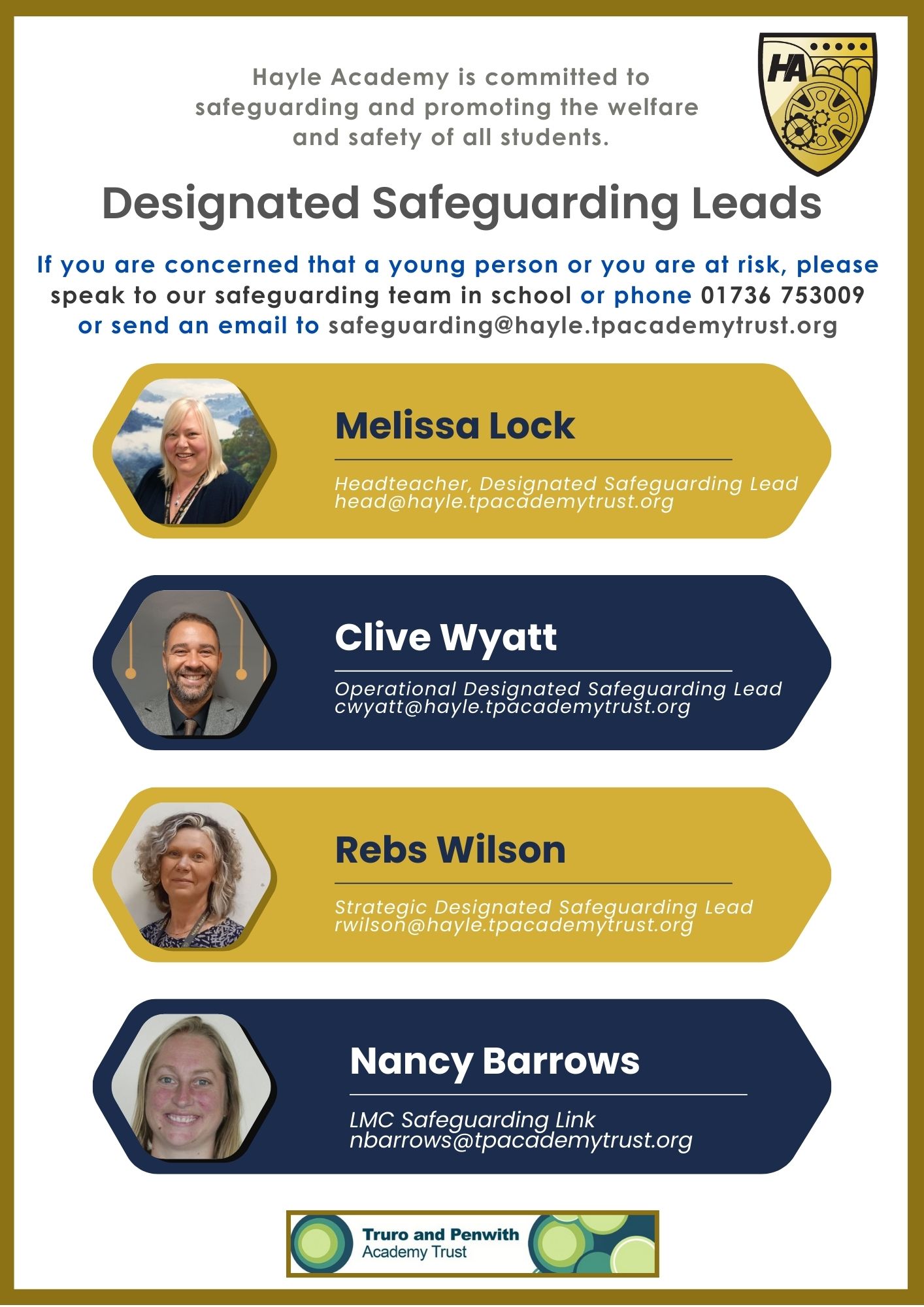
Please contact safeguarding@hayle.tpacademytrust.org
Or:
Contact a member of the Safeguarding team on 01736 753009